Menu
Date Published: April 5, 2023 (Updated September 15, 2026)
Table of contents :
Yes. Self-employment income is accepted at iCash the same way a salaried income is. Banks tend to treat self-employed applicants with more caution because there's no T4 and deposits vary month to month. We look at recent bank activity and your ability to repay instead.
The application runs on an instant decision model: the review happens electronically, in minutes, once your bank information is submitted. That doesn't mean every applicant gets approved.
iCash doesn't ask you to upload pay stubs, tax slips, or invoices. Verification happens electronically through your online banking connection, without submitting paperwork. It still helps to know what income evidence generally means for self-employed borrowers, since most other lenders still ask for it directly.
Income Type | What Lenders Typically Look At | Notes for Self-Employed Applicants |
Bank deposits | Frequency and consistency of payments | What iCash relies on |
Canada Revenue Agency (CRA) Notice of Assessment | Net income from a filed tax return | Common for mortgages |
Invoices and contracts | Active client relationships | Useful for business lenders |
Gig platform earnings | Payout history from rideshare, delivery or freelance apps | Counts when regular |
Business account activity | Overall cash flow and deposit pattern | A business-only snapshot |
If you earn through rideshare, food delivery, grocery delivery, or a freelance marketplace, those payouts count as income. What matters is the pattern, not the platform. Weekly or biweekly deposits from the same source read as a consistent income stream. iCash doesn't partner with or endorse any specific platform.
This requirement often causes confusion. Your income doesn’t have to be the exact same amount each month to be considered consistent. What does matter, however, is that it comes from the same ongoing source for at least three months. A freelancer whose monthly income moves from $2,200 to $1,600 can still meet that requirement if they’re continuing to work with the same client.
Self-employed borrowers in Canada have five broad categories to pick from: personal loans, business loans and lines of credit, mortgages, government-backed financing, and short-term loans. None of these, aside from short-term loans, is something iCash offers directly.
Canadian personal loans can range from a few thousand dollars to $50,000. Self-employed applicants may need to provide a Notice of Assessment or up to two years of tax returns to prove their income.
See the personal loans page for iCash's own product.
A business line of credit gives ongoing access to funds for operating costs. Two government-backed options are worth knowing. The Business Development Bank of Canada (BDC) finances small businesses and entrepreneurs, including sole proprietors. The Canada Small Business Financing Program (CSBFP) helps small businesses secure loans by sharing the lender's risk. Both suit business growth, not a personal gap.
Getting a mortgage while self-employed usually means showing at least two years of Notices of Assessment to a traditional bank. Alternative lenders can offer other options if your income doesn’t fit that model, although you’ll generally pay a higher rate. A mortgage broker is the right place to start.
A bank personal loan can make sense for a larger expense you’ve planned for and don’t need to cover right away. A cash advance app is better suited to a small gap between payments. A short-term loan from a licensed lender like us falls somewhere in between, covering a specific expense you know you can repay when your next deposit comes in.
Option | Typical Amount | Speed | Best For | Trade-Off |
Bank or credit union personal loan | $2,000-$50,000+ | Days to weeks | Larger, planned expenses | Needs documented income |
Alternative installment lender | $500-$15,000 | Same day to a few days | Mid-size gaps | Higher rates than a bank |
Home equity (homeowners only) | $10,000+ | Weeks | Large expenses | Homeowners only |
Business line of credit | Varies by lender | Days to weeks | Operating costs | Needs business history |
Cash advance apps | $50-$500 | Minutes to same day | Very small gaps | Low limits |
iCash short-term loan | Up to $1,500 | Minutes; funds by Interac e-Transfer® | A defined gap repayable next deposit | Not for large amounts or long terms |
If you need more than $1,500, or months rather than weeks to repay, a short-term loan isn't the right tool; that's a personal loan or line of credit conversation. A smaller loan amount keeps your cost down, and it's worth comparing cash advance apps too.
An short-term loan costs $14 per $100 borrowed. Borrow $500 for 14 days, and the cost is $70, for a total payback of $570 on your due date, calculated up front.
Provincial law requires these APR disclosures: Ontario, 365% for a 14-day term or 82.42% for a 62-day term; Nova Scotia, 365% for a 14-day term, single repayment only; PEI, 365% for a 14-day term or 82.42% for a 62-day term; Alberta, 82.42% for a 62-day term. These figures look large because APR annualizes a short-term cost; the dollar cost above is what applies.
Run your own numbers with the loan cost calculator, and review your borrower rights.
Here's the full checklist:
You're 18 or older (19 in BC, New Brunswick, and Nova Scotia)
You live in a province where iCash is licensed to lend
You've had the same income source for the past three months
Your net monthly income is $800 or more
You have an online bank account
You have a valid Canadian mobile number, address, and email (no VoIP numbers)
See the full qualifying requirements for the complete list by province.
A credit check is part of the process, and here's the part most pages skip: it only happens on your first application. Every loan after that is exempt, provided your account stays in good standing, which makes returning to iCash faster than starting fresh elsewhere.
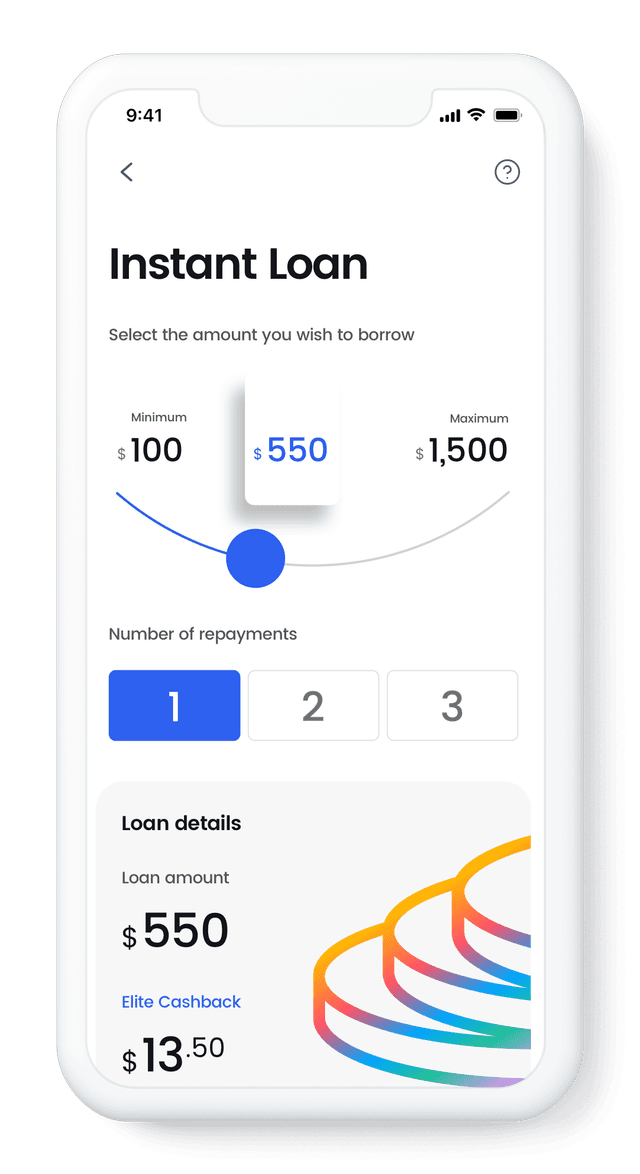
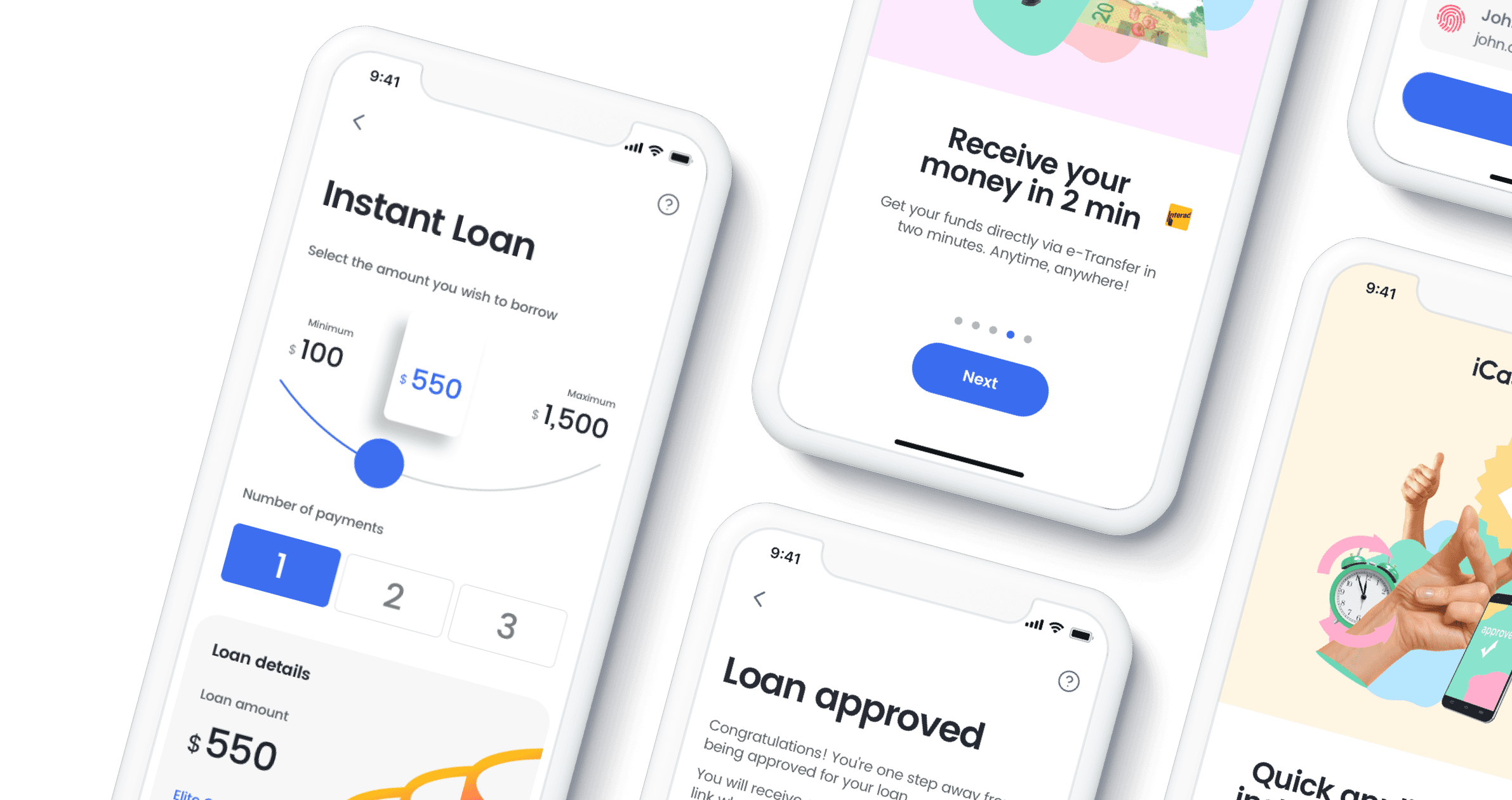
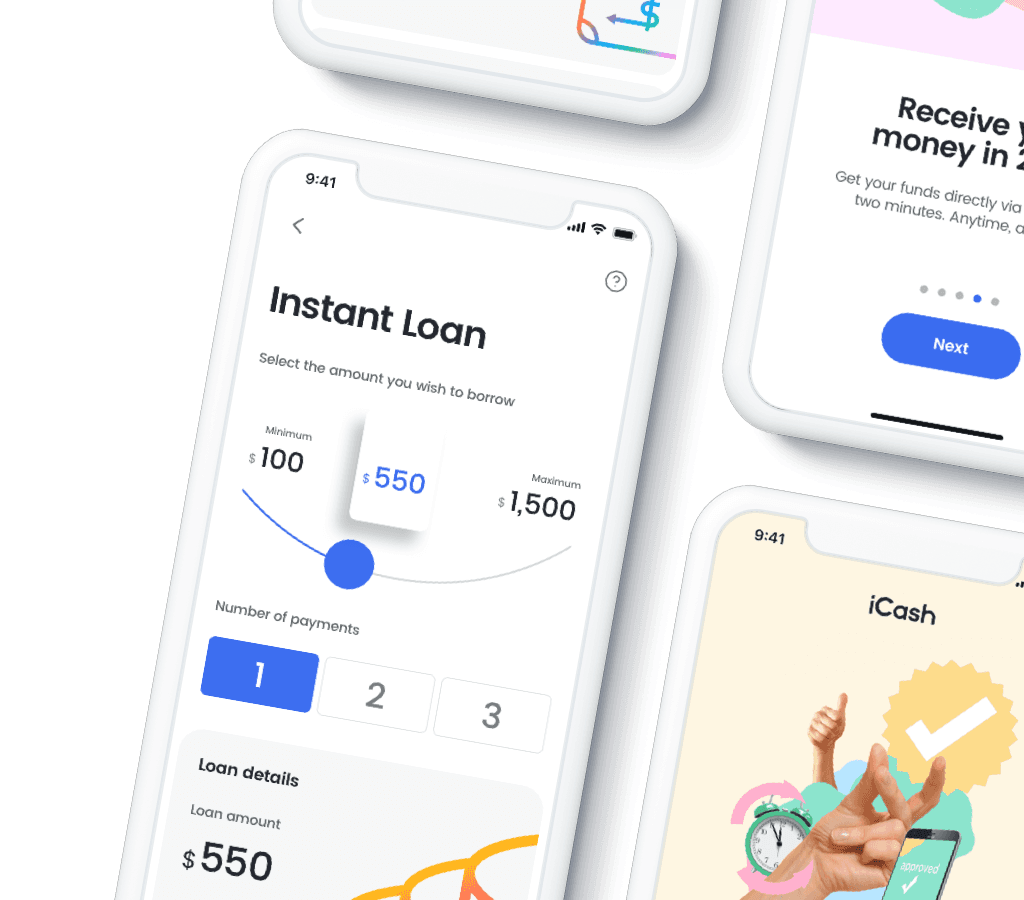
Getting an online loan with us is fast and easy. Simply select your loan amount, repayment plan* and provide some personal details.
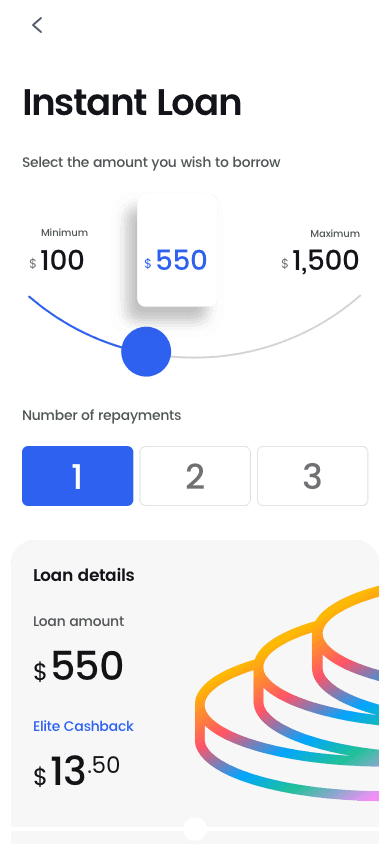
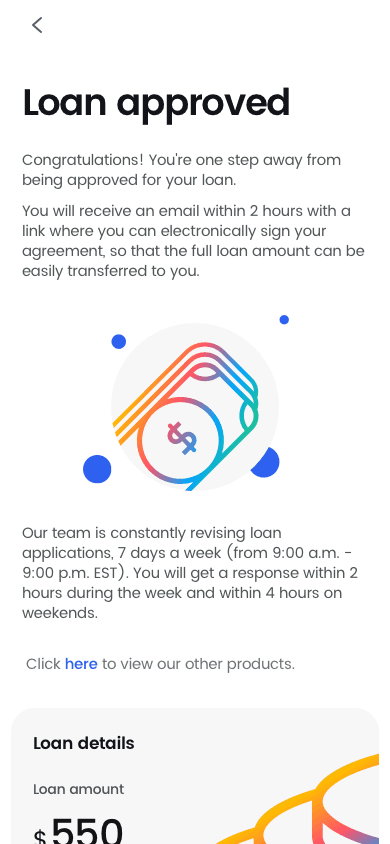
Our online loan application will tell you if you’re approved instantly. Once approved, all you have to do is electronically sign your contract. It’s that easy!
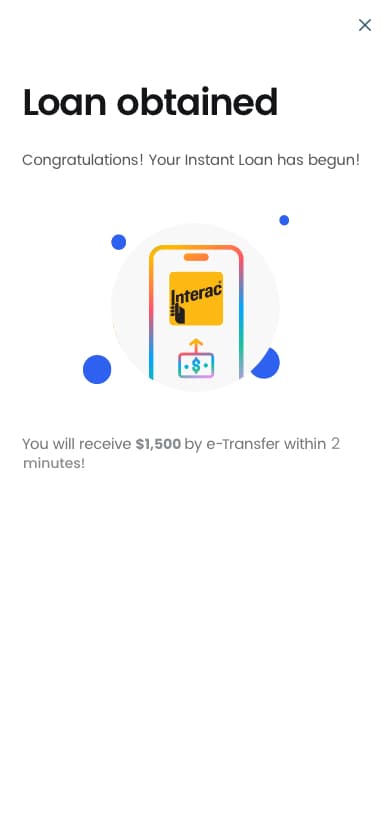
Once you sign your digital agreement, your cash advance will be sent by Interac e-Transfer within 2 minutes. Fast, convenient and hassle-free. Funds are sent 24/7, no matter what.
There are a few things you can do before applying. If possible, keep your business and personal transactions in separate accounts so your income is easier to follow. Apply when your recent deposits reflect a typical or stronger month, and request an amount that fits the expense you’re trying to cover. Recent or repeated NSFs may also hurt your chances, so it’s worth getting those under control first.
A lower credit score doesn't rule you out at iCash. The decision weighs your current income and financial situation over your credit history, though a check still runs on your first application; it isn't the deciding factor it is at a bank. The bad credit loans page covers that side further.
With a regular salary, your income is fairly easy to track through pay stubs and scheduled paydays. If you’re self-employed, payments can arrive at different times and in different amounts, so your banking activity tells more of the story.
Step | Salaried Applicant | Self-Employed Applicant |
Income proof | Pay stub or employment letter | Bank deposit history, no upload |
Income pattern | Fixed pay date and amount | Same source, amount can vary |
Application form | Same online form | Same online form |
Decision timeline | Instant decision | Instant decision |
Funding method | Interac e-Transfer | Interac e-Transfer |
Past the income question, the two paths are identical.
When you don’t receive a fixed paycheque, think about your cash flow rather than simply looking at your monthly income. Where provincial rules permit, set repayment around a client payment or platform payout you can reasonably count on. Depending on the loan, you may also have the option to spread repayment across a couple of dates.
If you’re unsure whether enough money will come in at all, that’s a different situation. Waiting may make more sense until your income is clearer. Short-term borrowing is best suited to a temporary gap with a reasonably predictable end date.
Read our page on borrowing responsibly if you're unsure.
A short-term loan fits a real, specific gap: an invoice due in eight days, a bill due tomorrow. It doesn't fit an ongoing shortfall, business growth, or existing debt. Those situations need a different kind of help, whether that's a business loan or a conversation with a credit counsellor.


Since 2016, we've helped over 1.6 millions Canadians get instant loans online.
Since 2016, we've helped over 1.6 millions Canadians get instant loans online.
Read more reviews.
Have more questions? Check out our full FAQ.